
Structured Finance Solutions: A Guide to Corporate Debt Refinancing and Restructuring
What Are Structured Finance Solutions and How Do They Work?
Structured finance solutions are funding arrangements designed around a business’s specific financial needs and can offer more flexibility in how funding is provided and repaid.
These arrangements may combine different forms of financing, including debt, equity and hybrid instruments.
For example, a growing business might need additional funding but want to avoid large repayments in the short term. A customised financing arrangement could help match repayments more closely to its expected cash flow.
Why Do Businesses Need Corporate Debt Restructuring?
Businesses may consider restructuring for several reasons:
- Cash flow difficulties
- Higher interest rates
- Upcoming repayments
- Lending conditions
- Changing business needs
Restructuring doesn’t always have to come from financial trouble, and can be a proactive way to improve financial flexibility.
Common Corporate Debt Restructuring Strategies
There are several ways businesses can make their debt more manageable, such as:
- Extending repayment periods to spread repayments over a longer period to reduce immediate pressure on cash flow
- Renegotiating loan terms by working with lenders to adjust interest rates or repayment schedules
- Combining existing loans to simplify repayments
- Debt-for-equity swaps
- Corporate debt refinancing, which involves replacing an existing loan with a new one that may offer more suitable terms
Exploring Different Types of Structured Finance Solutions
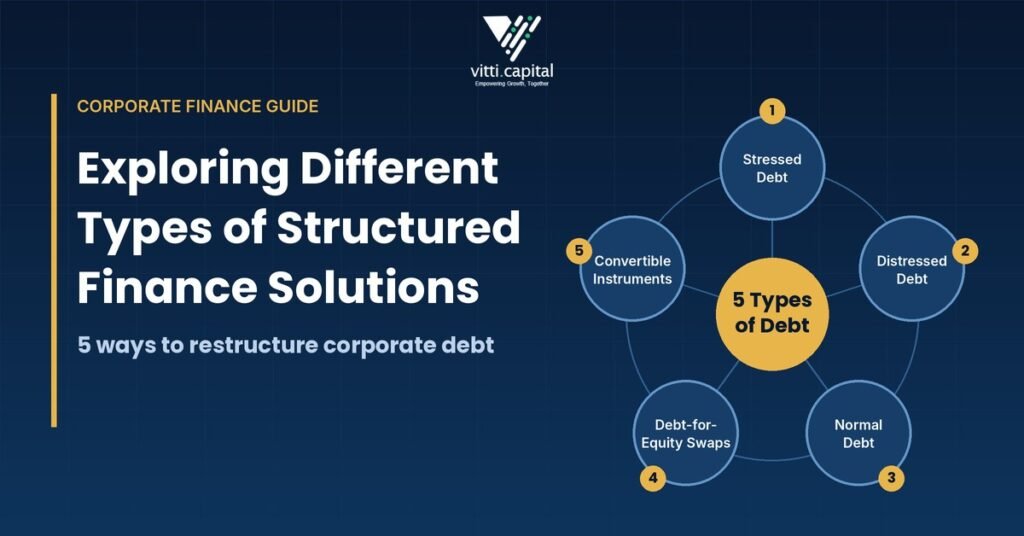
Stressed debt restructuring
Businesses experiencing temporary financial difficulties may negotiate longer repayment periods or revised interest arrangements to ease immediate cash flow pressure.
Distressed debt restructuring
When a company faces serious financial difficulties or risks defaulting, more significant changes may be necessary. These can include selling assets, reducing outstanding debt through creditor agreements or converting debt into equity.
Normal debt restructuring
Financially healthy businesses may restructure to improve borrowing conditions. This could involve negotiating lower interest rates, combining multiple loans or adjusting repayment schedules.
Conversion of debt to equity (debt-for-equity swaps)
Where lenders believe the company’s value can grow, some debt may be converted into shares. This reduces the debt burden and gives lenders a stake in the company’s future performance.
Other convertible financing instruments
Similar in concept, convertible financing instruments are loans or securities structured from the outset so they can convert into shares under agreed conditions.
More information regarding these types can be found here.
Debt Restructuring vs Refinancing
Although they sound similar, the two approaches differ.
Debt Restructuring | Debt Refinancing |
Changes existing debt obligations | Replaces debt with new borrowing |
May involve negotiating repayment terms or reducing debt | May involve a new lender or improved loan terms |
Can address financial difficulties or improve existing arrangements | Can help businesses secure more suitable financing |
How to Choose the Right Debt Restructuring Services for Your Business?
Choosing appropriate corporate debt restructuring services starts with understanding the company’s financial position and what needs to change.
Businesses should consider an adviser’s industry experience, ability to negotiate with lenders and access to alternative financing arrangements. It’s also important to assess the overall financing costs, repayment flexibility and long-term affordability.
Role of Business Debt Restructuring Companies in Financial Reorganization
Business debt restructuring companies and corporate finance advisers help organisations review existing loans, explore funding alternatives and negotiate revised arrangements with creditors.
The process generally begins with reviewing outstanding debts, cash flow and business performance before developing a realistic repayment strategy.
Management must then work with lenders to agree on suitable changes and monitor whether the new arrangements remain sustainable.
Where serious financial difficulties arise, specialist insolvency or legal advice may also be required.
Why Is Stakeholder Alignment Important in Structured Finance?
Restructuring debt often involves several parties and each party may have different priorities. Stakeholder alignment means working towards a solution that considers everyone.
For example, a lender may want confidence that their money would be repaid, while a business owner may be focused on maintaining cash flow and supporting future growth.
Choosing the Right Structured Finance Solutions for Sustainable Growth with Vitti Capital
Managing business debt isn’t just about meeting the next repayment. At Vitti Capital, we help businesses explore debt restructuring, refinancing, and structured finance solutions tailored to their financial needs.
FAQ
What are structured finance solutions?
Structured finance solutions are customised funding arrangements that help a business meet its financial needs.
How does corporate debt restructuring work?
Businesses negotiate changes to existing loans, such as longer repayment periods or adjusted interest rates.
What is the difference between debt restructuring and corporate debt refinancing?
Restructuring changes existing debt terms, while refinancing replaces existing debt with a new borrowing.
Why is stakeholder alignment important during debt restructuring?
Stakeholder alignment helps lenders, business owners and other parties agree on an arrangement that works for everyone.
How do convertible financing instruments work?
Convertible financing instruments allow some loans or securities to be converted into company shares under certain conditions.
When should a business consider debt restructuring services?
Businesses should not wait until the last minute to consider debt restructuring services. They can be used as a preventative measure as well.
Disclaimer
Vitti Capital Pty Ltd (ABN 13 670 030 145) is a Corporate Authorised Representative (001306367) of Point Capital Group Pty Ltd (ABN 41 625 931 900), the holder of Australian Financial Services Licence number 518031. This communication contains general information only and does not take into account your objectives, financial situation, or needs.
Before acting on any information, you should consider whether it is appropriate to your circumstances. We recommend you seek personal financial advice before making any investment decision.
If you have not previously received a copy of our Financial Services Guide (FSG), it is available free of charge by contacting us or via https://vitti.capital/fsg/
Past returns do not always indicate future returns and there is always a risk of loss when trading and investing. Our Privacy Policy is available at https://vitti.capital/privacy-policy-2
