
How to Invest in the Equity Market in Australia | Vitti Capital
Investing in the share market is one of the more reliable ways Australians tend to build wealth over time. Historically, Australian shares have returned roughly 9-10% a year on average when you include dividends, which is generally higher than both cash savings and inflation over the long run (Zach Bristow, 2024). It also provides access to a wide mix of industries like banks, mining, healthcare, tech, and consumer companies.
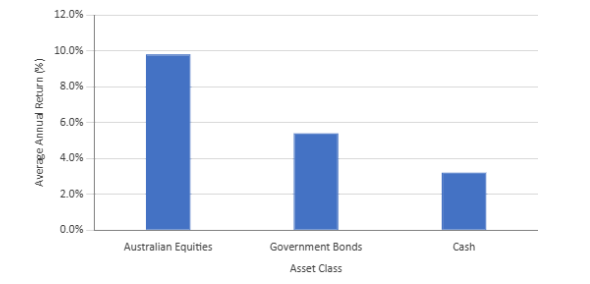
Data sourced from: (Tony Kaye, 2024)
Over time, shares have generally delivered stronger returns than both cash and bonds, which is why they form a core part of many long-term investment portfolios. The ASX is also a major market globally, with a total value of around A$2-3 trillion, making it one of the largest exchanges in the Asia-Pacific region (Market Index, 2026).
The Australian market is quite concentrated compared to some others, with a heavy tilt towards financials and resources. Large companies like Commonwealth Bank, BHP and CSL dominate the ASX200, and the top 10 stocks alone usually account for close to half of the ASX 200 (around 49%), which shows how much influence a small group of companies can have (Vaneck, 2026).
Understanding the Australian Equity Market
The Australian equity market is primarily operated through the Australian Securities Exchange (ASX), where companies list their shares for public trading. When investors buy shares, they are purchasing partial ownership in a business. As companies grow and become more profitable, shareholders may benefit through capital growth, dividend income and dividend reinvestment opportunities.
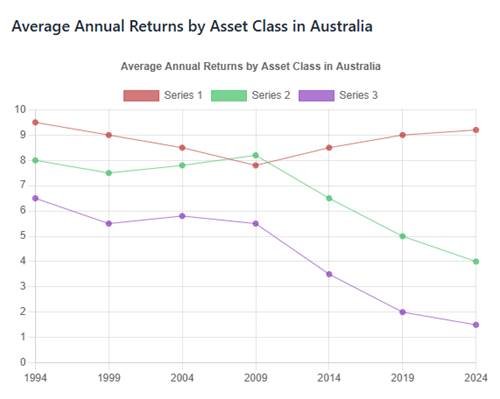
Equities also provide income through dividends. The average dividend yield on the Australian market is typically around 3.5-4.5%, which is higher than many global developed markets. Australia is particularly known for franked dividends, which can increase after-tax returns for domestic investors (ASA Insights, 2023).
Australia’s market is heavily weighted towards financials and resources, with companies such as Commonwealth Bank, BHP and CSL representing some of the largest ASX-listed businesses.
Also Read – Equity Market Investment Strategies for Long-Term Wealth
Why Invest In Equities?
One of the main reasons investors allocate money to equities is their long-term return potential. Historically, shares have outperformed many traditional asset classes over long periods, particularly when dividends are reinvested. Equities can also provide passive income through dividends, which are especially attractive in Australia due to the presence of franking credits.
Beyond income, equities offer the potential for capital appreciation as companies grow earnings and expand over time, one of the few asset classes capable of meaningfully building real wealth after inflation. Unlike bonds or term deposits, they also provide a natural hedge against rising prices, as companies can often pass higher costs on to consumers, helping protect purchasing power over the long run.
Listed equities offer a level of liquidity that assets like property cannot match, with investors able to buy or sell quickly and efficiently during market hours. They also span a wide range of sectors and business models, making them a versatile tool for spreading risk and reducing reliance on any single investment.
Perhaps most powerfully, equities benefit from compounding. When dividends are reinvested and earnings grow within a business, returns build upon themselves over time, making shares particularly well-suited to long-term goals like retirement savings or wealth accumulation.
Different ways to Invest
Some investors buy individual shares directly through a brokerage account, giving them full control over stock selection. However, this approach requires strong research and exposes investors to higher company-specific risk, where a single stock can fall 20-50% or more in a short period due to earnings or market news (Harry Hagias, 2026).
This approach offers greater control over investment decisions but also requires significant research and a higher tolerance for risk.
Other investors prefer Exchange Traded Funds (ETFs), which provide exposure to a diversified basket of shares rather than a single company. ETFs offered by firms such as Vanguard, BetaShares and iShares have become increasingly popular due to their lower fees, diversification benefits and simplicity.
Managed funds are another option, where professional managers actively invest on behalf of clients. While some active funds aim to outperform the market, research shows that over 10-year periods, the majority of active managers underperform broad market indices after fees.
Building an Investment Strategy
Before investing, individuals should define their financial goals, investment timeframe and risk tolerance. Long-term investors, typically those of 10+ years, are generally better positioned to withstand market volatility, where annual declines of 10-20% are common, even in strong long-term growth markets (Daniel Prince, 2026).
Investors must open a brokerage account and conduct research into potential investments. This includes analysing earnings growth, debt levels, profit margins and industry conditions. For ETFs, investors should review fees, which typically range from 0.03% to 0.80% per year, with lower fees generally improving long-term returns (Vanguard, 2026).
Many investors also use dollar-cost averaging, where they invest consistently over time regardless of market conditions. This strategy reduces the impact of short-term volatility and encourages long-term discipline.
Understanding the Risks
Although equities can generate strong returns, they also involve risks. Share prices can fall significantly due to economic conditions, interest rate changes, inflation, geopolitical events and company earnings results.
Individual companies also face risks such as poor earnings, rising debt or disruption from competitors. Even large companies can experience significant drawdowns exceeding 20-40% (Ben Felix, 2025).
For example, Telstra, saw its share price fall from approximately $9.00 in 2000 to under $3.00 by 2010, which is a drawdown of over 65%, as a result of increased competition, and structural disruption of its service provider sector (Mark Colvin, 2010).
Emotional investing is another major risk, as fear and greed often lead investors to make poor decisions during periods of market uncertainty.
Active vs Passive Investing
Investors must also decide whether they prefer an active or passive investment strategy, or a combination of both. Passive investing aims to match overall market performance through low-cost index funds and ETFs, while active investing attempts to outperform the market through stock selection and market timing.
Passive investing generally involves lower fees and greater diversification, whereas active investing requires more research and carries higher performance risk. Many investors choose to blend both approaches, using a passive core for broad market exposure while allocating a portion of the portfolio to active positions where they have higher conviction. Ultimately, the right balance depends on an investor’s objectives, experience, and appetite for risk.
Happy Investing!
Vitti Capital Pty Ltd (ABN 13 670 030 145) is a Corporate Authorised Representative (001306367) of Point Capital Group Pty Ltd (ABN 41 625 931 900), the holder of Australian Financial Services Licence number 518031. This communication contains general information only and does not take into account your objectives, financial situation, or needs. Before acting on any information, you should consider whether it is appropriate to your circumstances. We recommend you seek personal financial advice before making any investment decision.
If you have not previously received a copy of our Financial Services Guide (FSG), it is available free of charge by contacting us or via https://vitti.capital/fsg/
Past returns do not always indicate future returns and there is always a risk of loss when trading and investing. Our Privacy Policy is available at https://vitti.capital/privacy-policy-2
